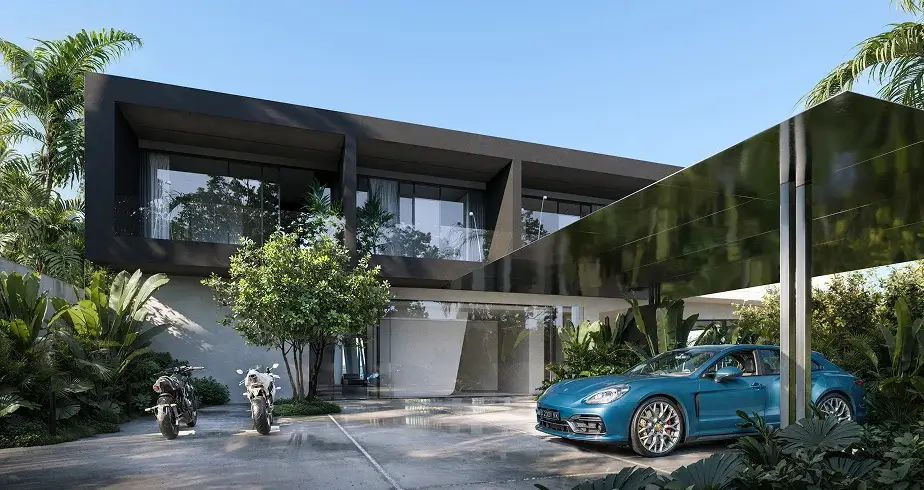
villa maya

Beyond the time

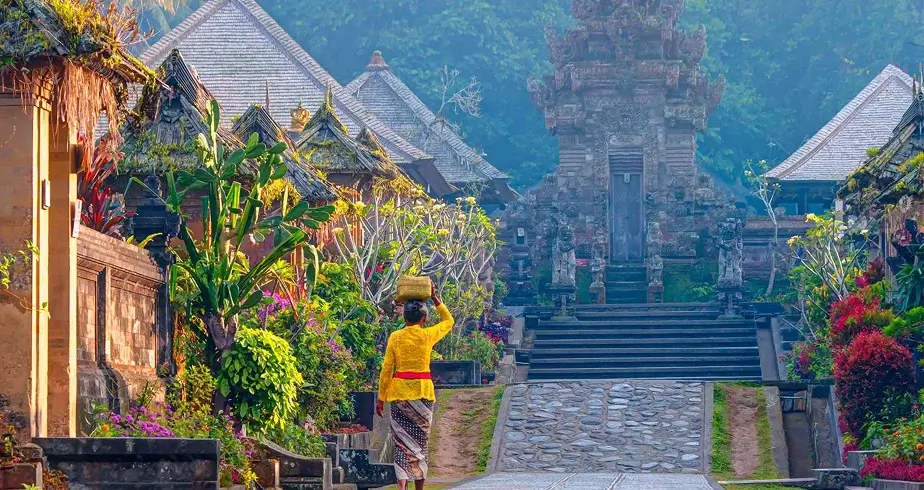
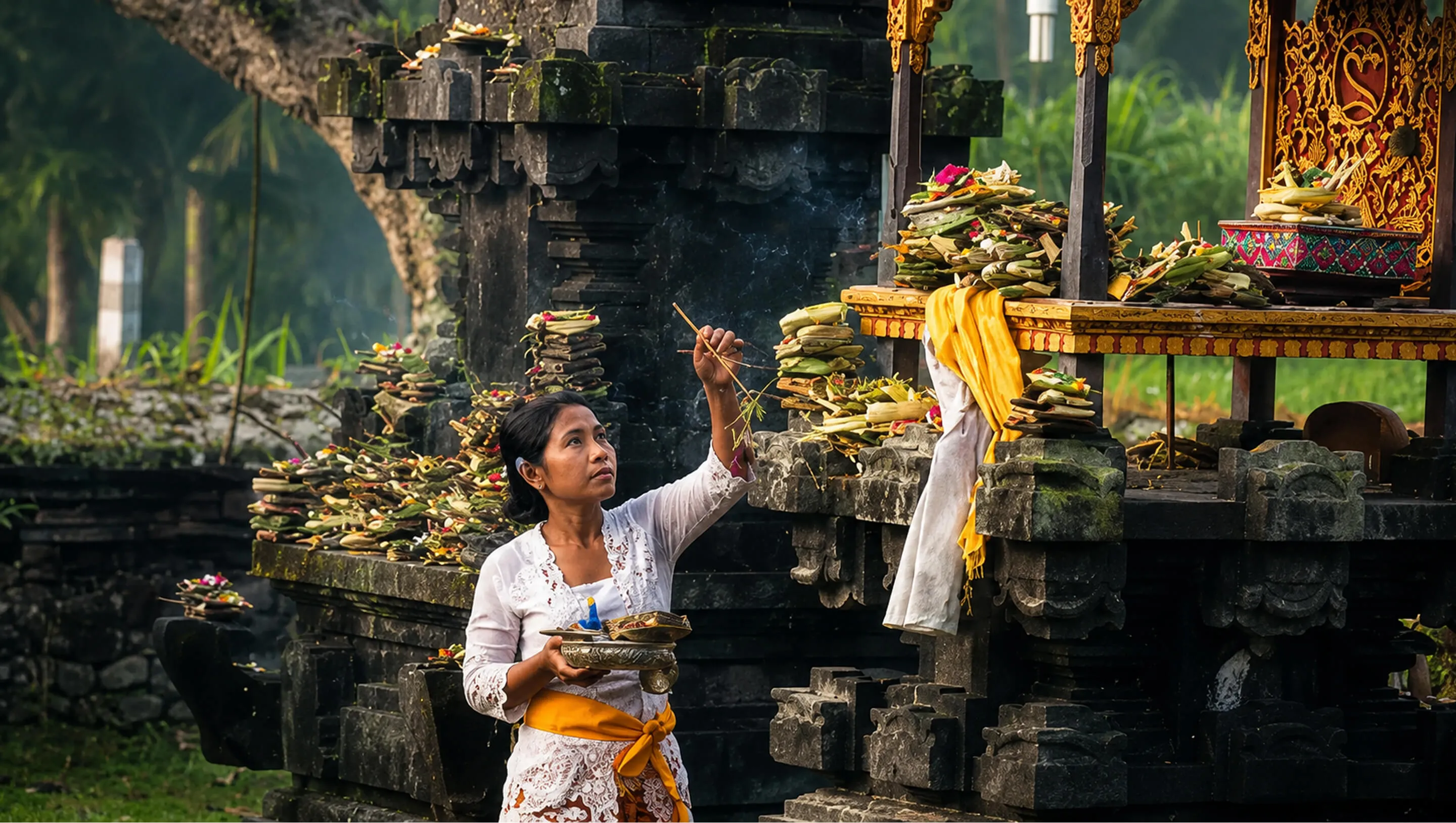
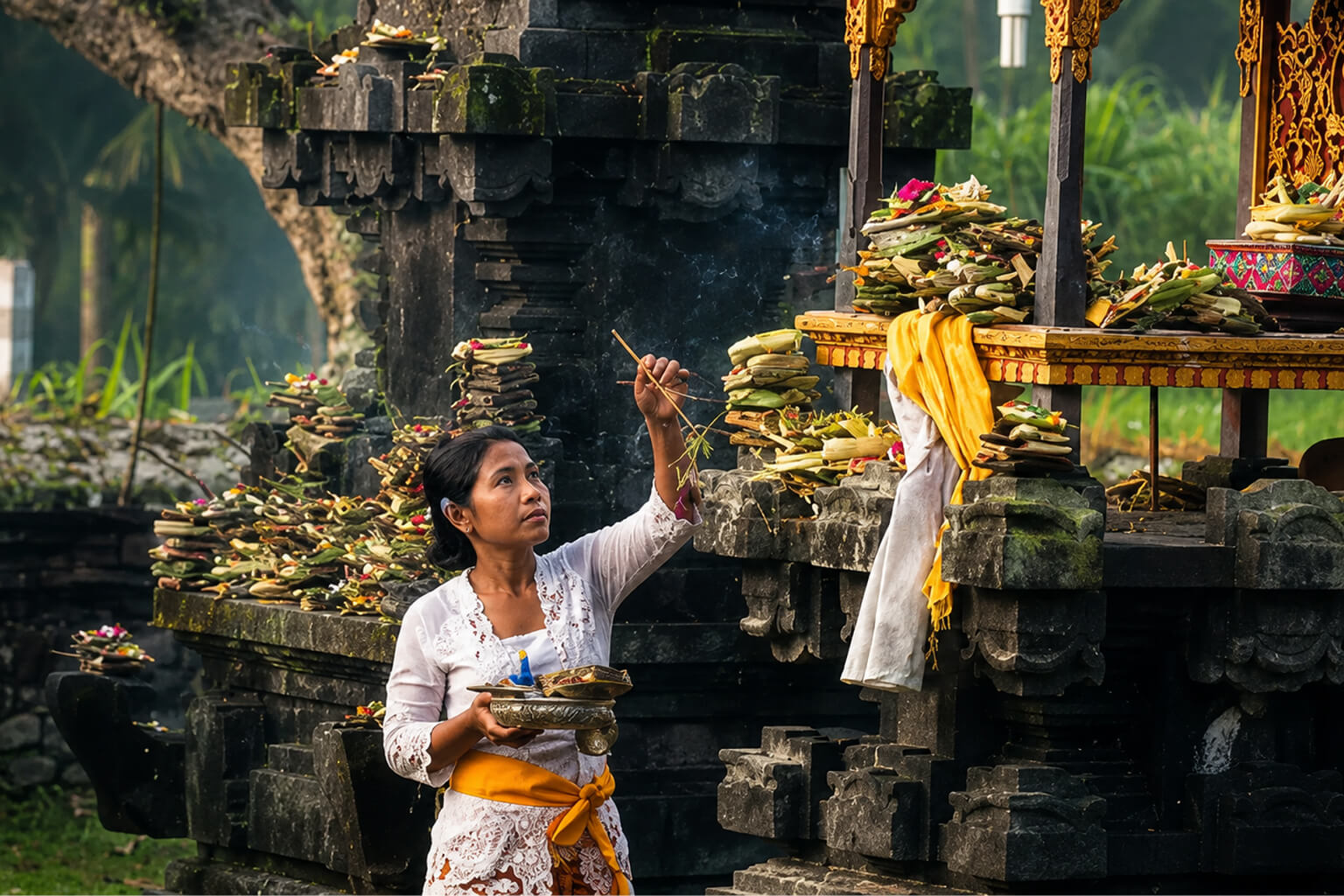
Bali is an island where time moves to its own rhythm. Here, ancient temples coexist with contemporary villas, daily ceremonies intertwine with digital technologies, and sacred meanings blend with the vibrant pulse of modern life. Bali is a living bridge between the past and the future, uniting the wisdom of antiquity with the potential of the present. The island’s authenticity is most vividly revealed through the way its people create their homes. For the Balinese, a house is more than walls and a roof — it is a sacred space. Every household has its own temple, large or small, where the family performs daily religious ceremonies. This ritual is not an obligation but a natural rhythm of life. The home temple symbolizes harmony between humans, nature, and the gods — a harmony without which life on Bali is impossible.

Ceremonies take place every day. Each day is a small celebration, filled with the scent of incense, the rustle of palm-leaf offerings, and the sounds of gamelan — the traditional Balinese orchestra. These rituals maintain the balance of the world and preserve harmony between earth and sky.
The deep integration of modern life and ancient ritual practices is one of Bali’s most distinctive features.
Even in the 21st century, as the island has become a global center of tourism and contemporary design, the Balinese people continue to live by their traditions. The reason lies in the philosophy of Tri Hita Karana — the harmony between humans and the gods, among people, and with nature.

This philosophy explains many aspects of existence, turning tradition from mere formality into a conscious choice.
For the Balinese, ancient religious customs form the foundation of the future.

The island’s public temples are sacred spaces for major ceremonies — many of them centuries old.
The oldest sanctuaries are not just architectural monuments but living centers of spiritual energy:
Pura Luhur Lempuyang rises high on the mountain, opening the “Gates of Heaven.”Goa Gajah, the “Elephant Cave,” preserves the mystical atmosphere of the 11th century.
Pura Besakih, the “Mother Temple,” at the foot of Mount Agung, remains the spiritual heart of Bali.
Each temple is a bridge between eras — a living connection linking ancient traditions with the contemporary life of the Balinese people, a conduit of timeless wisdom.

The architecture of 21st-century Bali, while maintaining its connection to the past, follows the same timeless principles as the island’s temples — respect for nature, symbolism of form, and the use of natural materials. New buildings become manifestos of tradition, expressed through a new aesthetic and enhanced by contemporary technology.

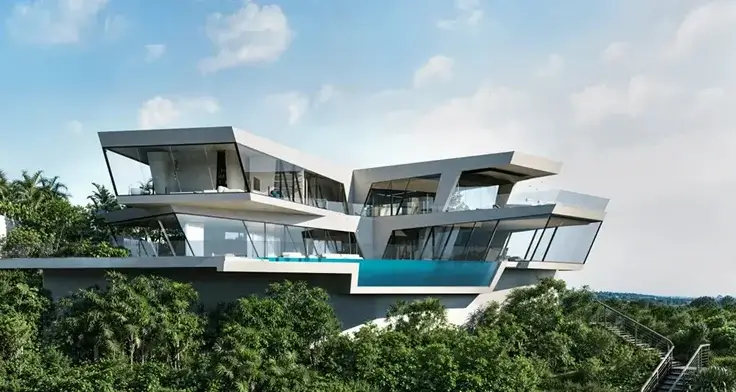
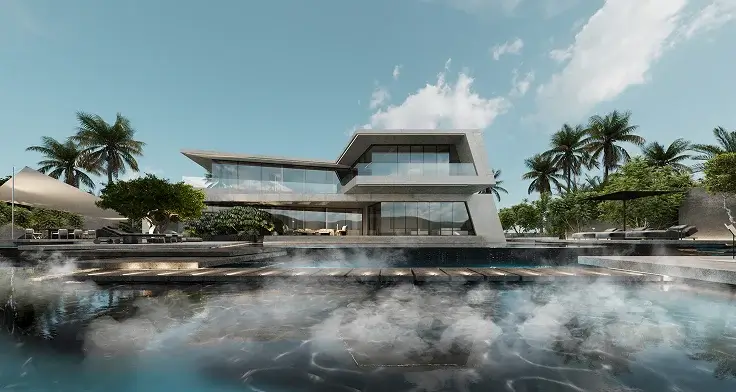
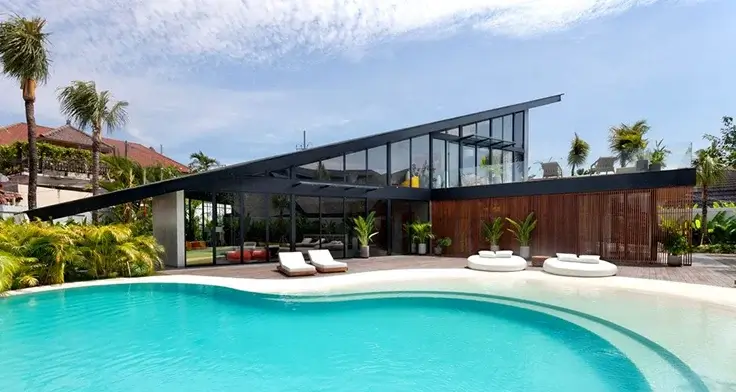
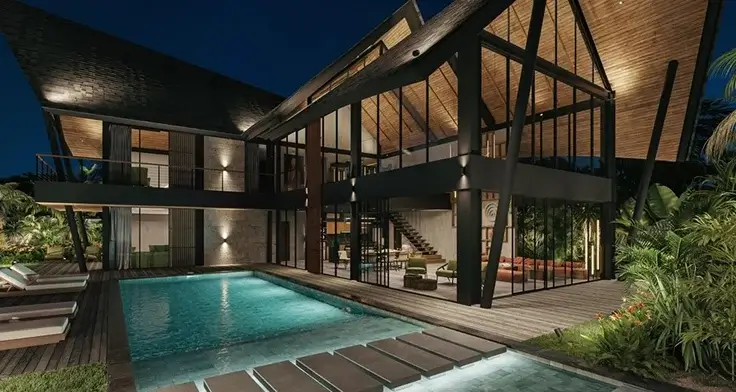
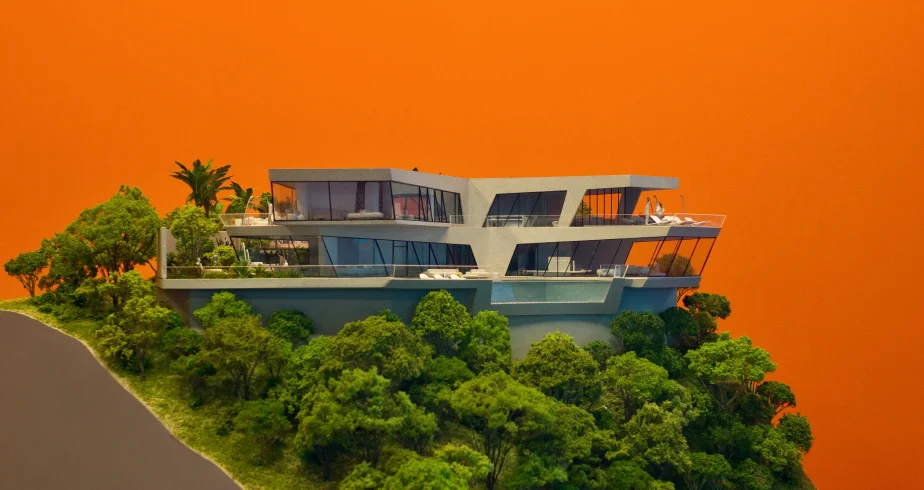
Villa Maya represents a modern interpretation of ancient Balinese philosophy, reimagined through contemporary architecture.
Its design draws inspiration from the multi-tiered Meru temple roofs — truncated pyramids that symbolize Mount Meru, the axis of the world in Hindu cosmology. The use of this form is a tribute to Balinese heritage — an intention to offer guests a unique experience of standing at the intersection of past and present.
The word Maya in Balinese means “illusion” — something elusive, dissolving in time. This is a structure that resists simple classification, existing between ancient monumentality and modern comfort, between sacred traditions and technological innovation. The design philosophy aimed not just to create a building, but to evoke emotion — to craft an unforgettable experience.

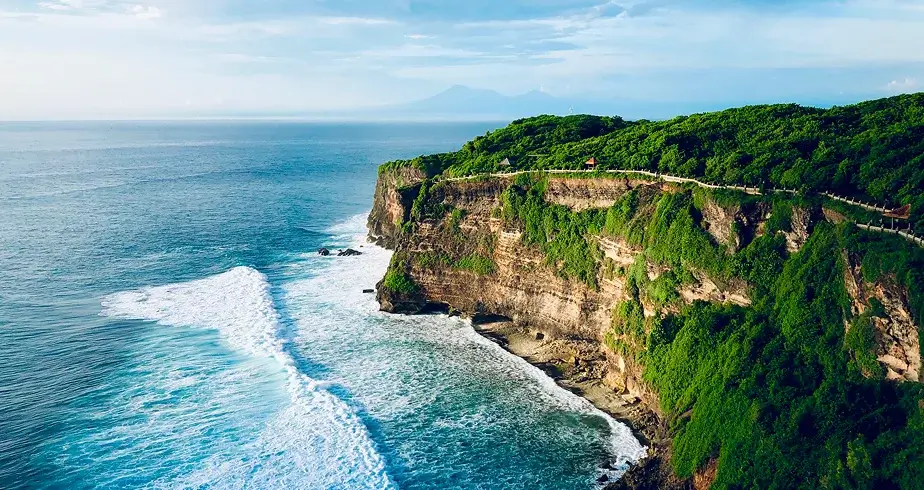
The journey to Villa Maya is an ascent towards the sky. As the road winds through the limestone hills of Pecatu, breathtaking views unfold — sacred sites where the heavens feel closer and the ocean stretches into infinity.
Poised atop this landscape, Villa Maya awaits not merely as a destination, but as a sanctuary.

From its elevated position, the villa commands sweeping views over Bali’s southwest coast. To the east, the sun rises above the Indian Ocean, bathing a chain of untouched beaches and manicured world-class golf courses in golden light — a panorama of modern leisure framed by natural magnificence.

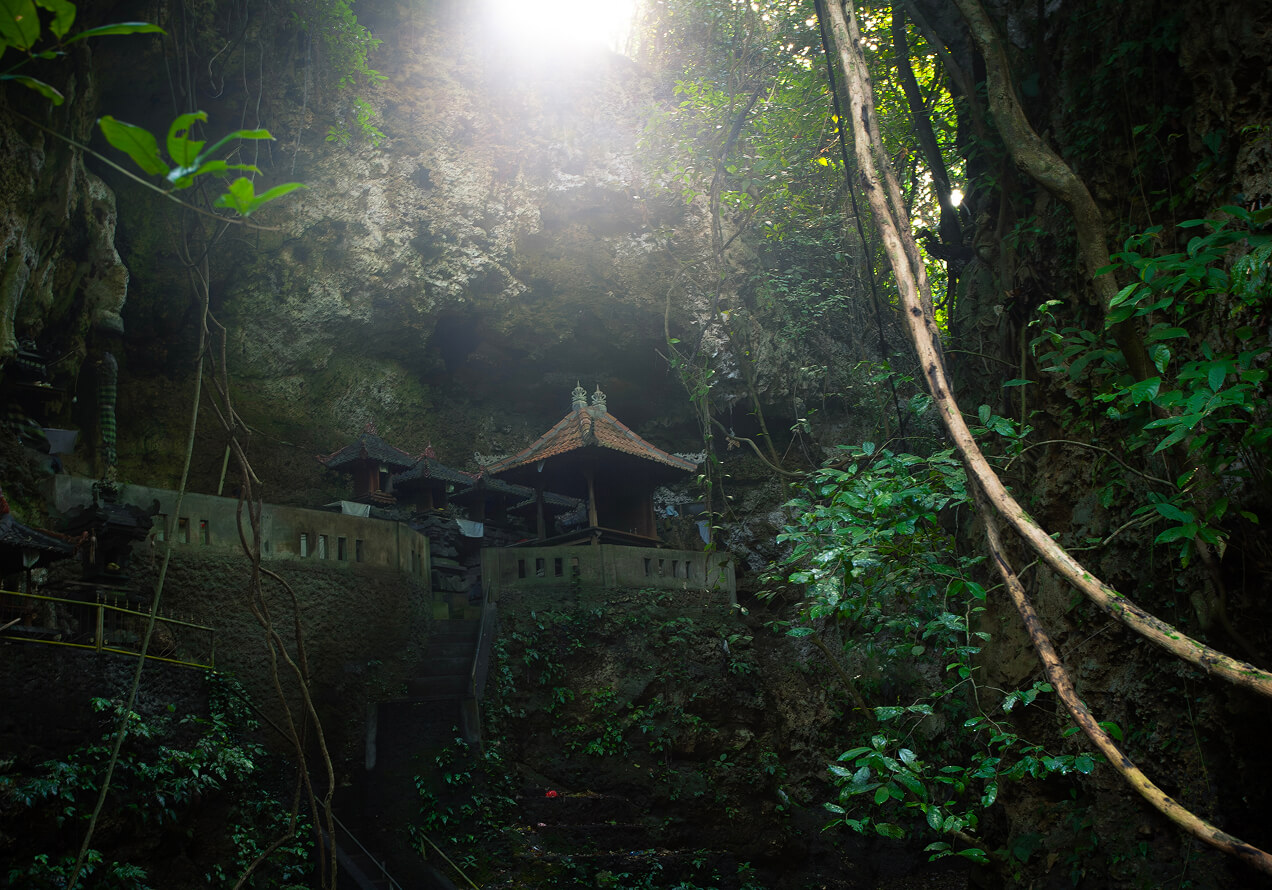
Yet the true soul of this place lies hidden. At the foot of the hill, veiled by foliage and time, rests an ancient temple carved directly into the rock. This silent spiritual guardian watches over the land — an invisible anchor connecting the villa to the very heart of Bali.

In Balinese culture, one does not simply build upon the land — one enters into relationship with it. The laying of Villa Maya’s first stone was a celebration, a traditional ceremony honoring the spirits of the earth. The priests’ blessing was not a formality, but a sacred dialogue — the true cornerstone of the villa, affirming that this home is not imposed upon the landscape, but born from it.

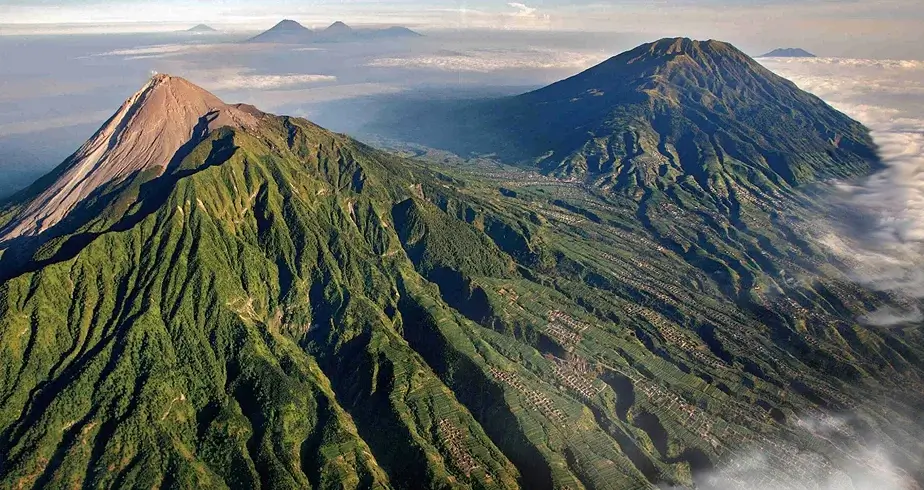
The form of Villa Maya recalls not only the Meru temple roofs, but also Bali’s sacred volcanoes.
From the hill where it stands, on a clear day, one can see the island’s holy peaks. A volcano in Bali is not just part of the landscape — it is a living being. Its breath can be felt in the clouds, in the trembling earth, in the shifting play of light across its slopes. It is a shrine — a symbol of eternal strength and unfathomable nature.

Bali’s landscape itself is imbued with sacred imagery. Waterfalls, mountains, canyons, jungles — everything here is alive with spirits. Spend a little time on the island, and you begin to feel this energy: it’s in the air, in the sounds, in every rustle of the leaves.

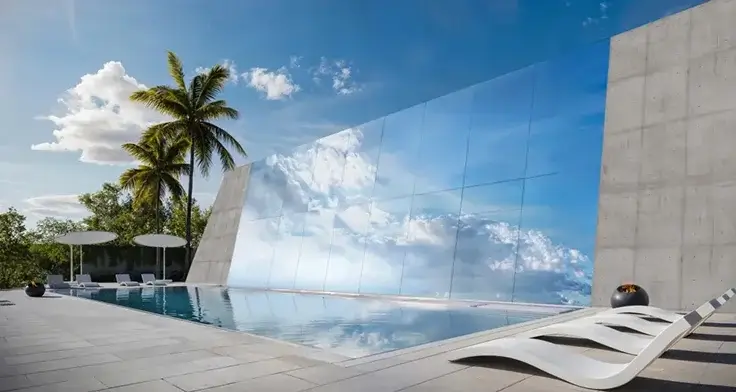
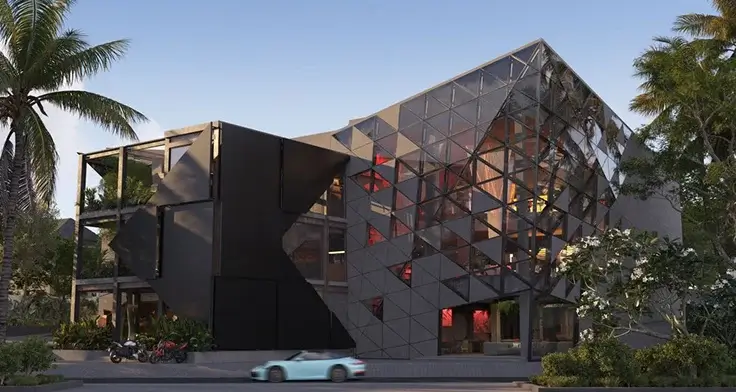
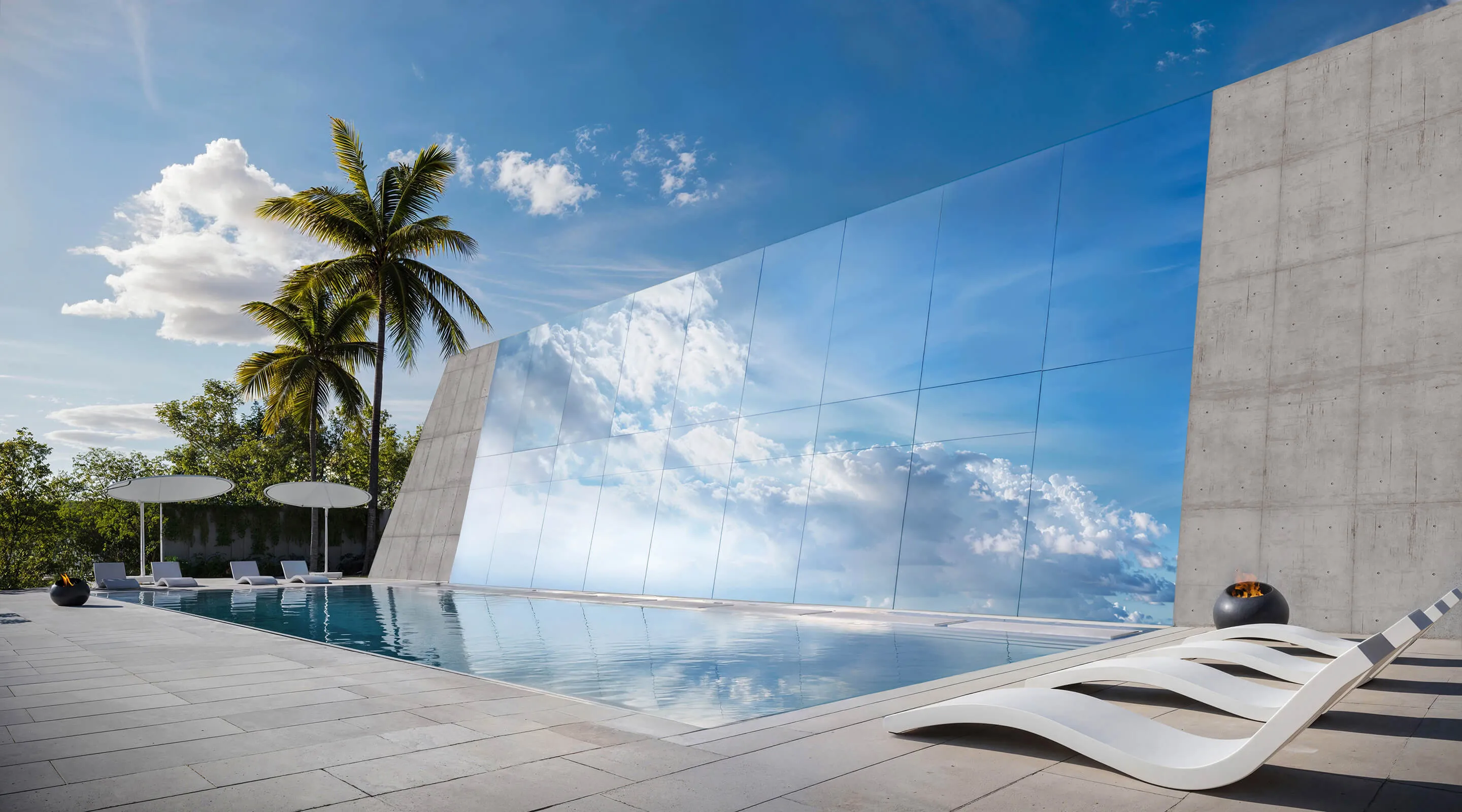
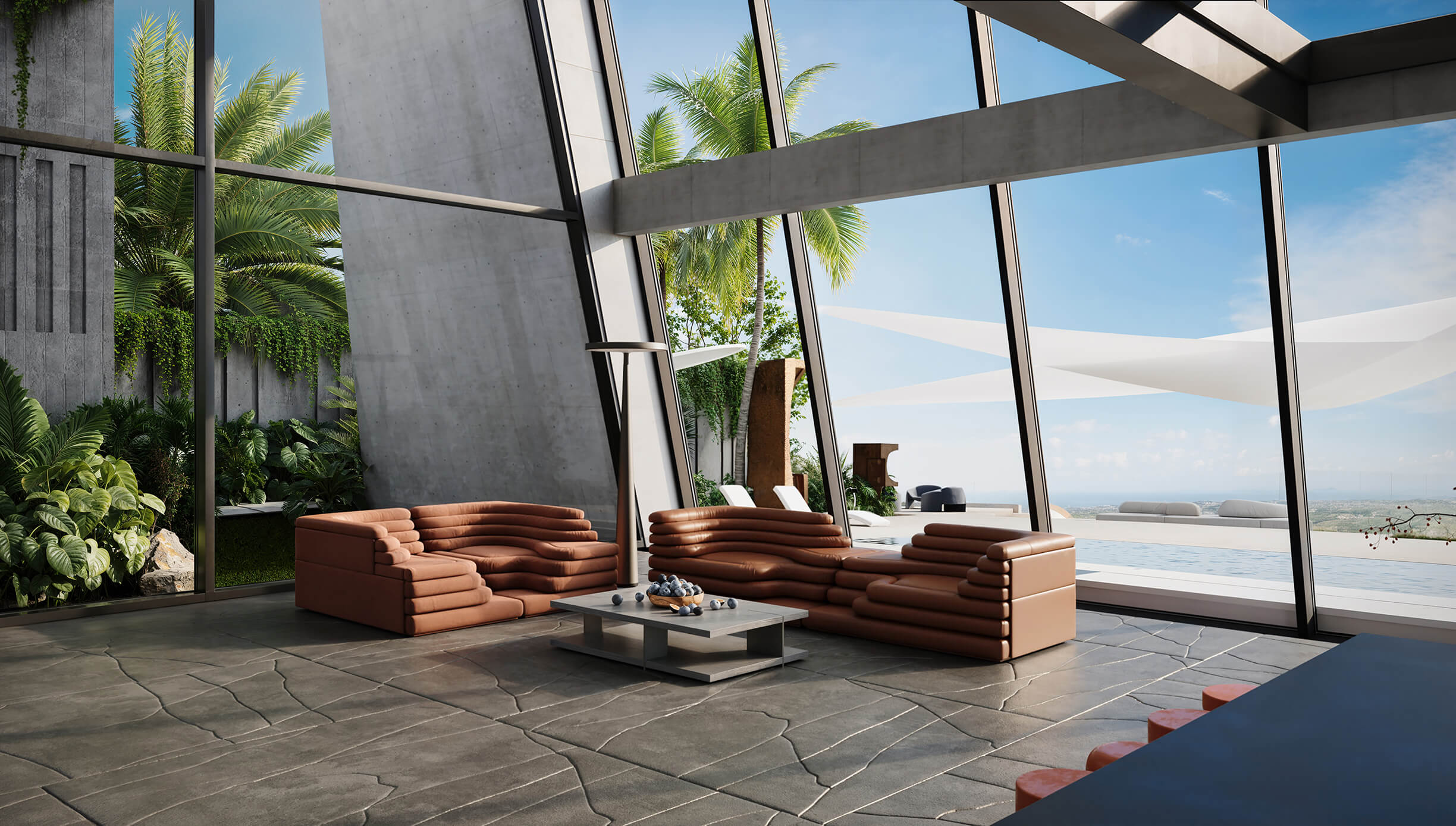
In Balinese philosophy, nature holds a sacred, central role. Equally significant is light — a symbol of meaning, inspiration, and divine presence. Light became the primary element shaping Villa Maya’s architectural identity. The façade is a single expanse of glass whose mirrored surface interacts with sun and sky, reflecting clouds and dissolving the villa’s bold, sculptural form into its surroundings. Light turns the building into a living organism — one that transforms with every hour, every change of weather.

Architecture and interior exist in seamless dialogue. Structural elements — the glass façade, concrete side wings, and a sculptural slab — shape how light enters the interior. As sunlight shifts, shadows move across the space, creating a dynamic geometry that evolves throughout the day.

The entrance composition plays a special role in this choreography of light. Its fractured glass geometry alludes symbolically to the Balinese spirit Barong — the guardian of the home, protector of its energy.

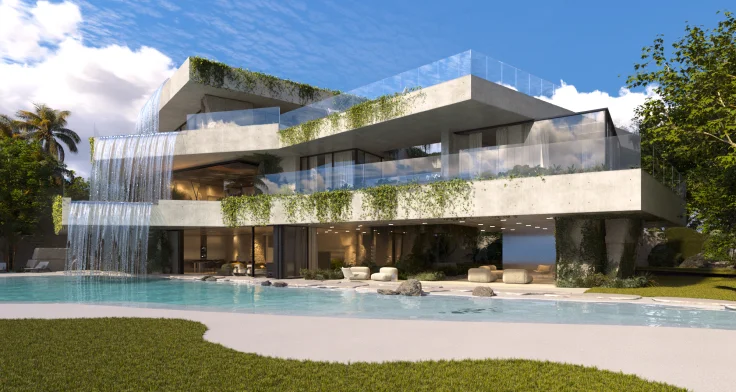
The villa’s structure is built from architectural concrete, giving it a monolithic strength and grounding — as if it rises directly from the rock beneath it. Concrete defines not only the structure but also the aesthetic: a union of rawness and grace, of strength revealing beauty through texture and weight.

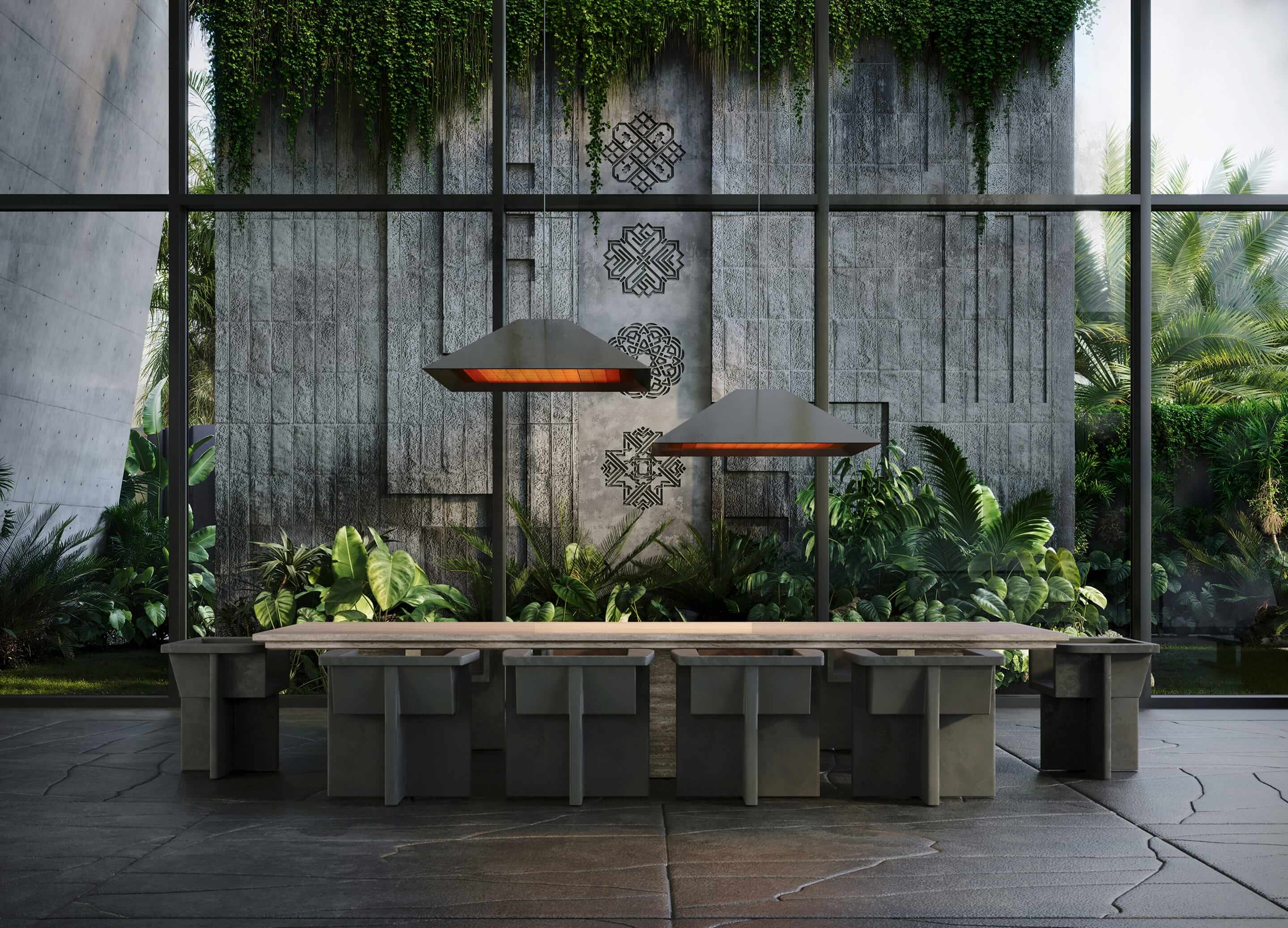
The interior continues this philosophy. It is composed in muted tones — grey plaster and concrete referencing traditional Balinese materials derived from volcanic stone. This restrained palette creates an atmosphere of calm and depth.

The austerity of the concrete is softened by lush greenery visible through expansive glazing — nature flows into the interior, breathing life into it.

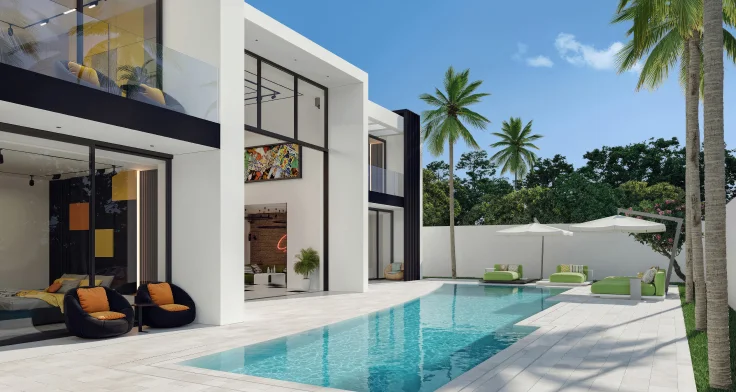
The final accent is the furniture: vibrant tones introduce a note of modern energy, creating a vivid contrast and sustaining the villa’s core philosophy — the harmony of opposites.

Villa Maya is not merely an architectural creation; it is a spectrum of sensations — a living ecosystem shaped by Balinese culture and ancient wisdom. Life here becomes a meditative experience, a contemporary interpretation of a Balinese ceremony where every space, every ray of light, and every material becomes part of a larger story. Architecture at Villa Maya is not form for form’s sake — it is a ritual, a path to harmony between human, nature, and spirit.